Showing posts with label John Irving. Show all posts

Wednesday, December 26, 2012

My Favourite Books of 2012

Here it is: my top five of 2012. I read a tonne of books this year, at least, relative to last year, and I tried to read as many 2012 titles as I could. But I had a huge backlist of titles sitting on my bookshelf that I wanted to read - things like Alias Grace and Motherless Brooklyn, or catching up on Jasper Fforde. I did manage to read a solid number of new titles this year, which made me feel that I accomplished something: I could read the reviews as they came out instead of waiting until I read the book, and I could make recommendations based on the type of reader rather than going by other reviews or recommendations. Which brings me to my #5: In One Person by John Irving.


John Irving is not for everyone. He has a specific style, honed through 40 years of writing. Readers who like him, like him a lot. Those who don't, well, I don't think they ever will. In One Person is for those who like John Irving. It revisits many of the themes he uses consistently: New England, absent father, extraordinary coincidence, sexual discovery and, of course, wrestling. Irving takes on the AIDS epidemic as his main character, Billy Abbott, goes through a sexual discovery in a private high school in New Hampshire and becomes a novelist who writes about his experiences (another Irving theme). Billy then faces the AIDS crisis in the early 80s and watches helplessly as many of his friends and former lovers pass away. Irving writes in his usual blunt style, pulling no punches about the physical and emotional havoc the disease has on both those affected, their families and the survivors. Billy even wrestles with survivor's guilt after visiting hospice after hospice. Of course, the foreshadowing and repetition of both themes and phrases in the novel make Irving's characters seem familiar, since we've seen these things before in other novels. But it doesn't make this novel any less interesting, and a compelling read for those who know and love Irving. If you haven't read John Irving before, start with A Prayer For Owen Meany, then The World According to Garp. If you make it that far, your next read is your choice, and the world of John Irving will open up for you.

Now, when I look at top picks lists for a given year, or "the best books I've read this year" and that sort of thing, I am looking for recommendations for my reading list. I want to know what books I may have missed in 2012 that I should read. Or, alternatively, what books can I move from my "maybe" pile to my "tbr" pile - case in point, Gone Girl. I didn't really think it would appeal to me, and I avoided reading it for a long while. But after reading about it in several blogs and bestseller lists, I decided to give it a try, and it paid off. It's my number 4 book of 2012: Gone Girl by Gillian Flynn.


Gone Girl broke many of the expectations readers had for genre fiction: it's a suspense novel, it's a police procedural, it's a psychological thriller, it's a relationship book. It is all of those things put together, and it works. The book begins with Nick Dunne returning home to discover a tossed house and a missing wife. What has happened to Amy, and on their fifth wedding anniversary no less? Flynn uses an alternating narrator device to tell the story of Nick and Amy Dunne and the reader must piece together the story of their marriage and the current predicament. But who is telling the truth? Whose version of events can we trust? Can we trust either of them? The result is a challenging read and one of the better ones of 2012.

A pet peeve of mine when I read "best of" lists or more specifically "best books read" lists is that many blogs and sites will present you with a list of books that aren't from 2012 at all, but a list of books read in 2012; a reader catches up on a classic, or that award winner from last year that didn't make the cut in the calendar year. While I appreciate reviews of great books and I am always interested in recommendations, December is not the time to rave about Anna Karenina or Catcher in the Rye. I want to know what books from the past year I should read; I already know about classics that everyone else has read and written about. Perhaps January is the month for recollecting your reading habits, while December is the month to add to your to be read pile for 2013. Just remember to review them in January 2014, not the following December. Hence, my #3 pick for 2012 is not The Art of Fielding by Chad Harbach but The Headmaster's Wager by Vincent Lam.


Vincent Lam's first novel is a labour of love - five years spent researching and writing a book that has close ties to his own family's history. The novel focuses on Percival Chen, a Chinese citizen living in Saigon before the proper involvement of the American Military in Vietnam. We hear about how he came to Saigon before the end of the Second World War, fleeing Hong Kong just in time to avoid the Japanese invasion. However, the Japanese also made it to Saigon, and Chen must find a way to thrive in an occupied country. He manages to survive the Japanese occupation, as well as the French, and we follow as he struggles to make his fortune as a headmaster of an English Academy as the Americans arrive. The story continues through to the end of the Vietnam War, when the occupiers change once again from American to Communist North Vietnamese. Along the way, Chen is tortured, blackmailed, bribed, and pressured, but he continues to have his eye on earning enough to return to his native China and raise his son in a traditional way - that is, the China he remembers, before the war and before the Cultural Revolution. So much changes for Chen throughout the novel and the reader watches and he searches for ways to adapt - and often fails to do so quickly enough to save his dream for the future or prevent the ones he loves from getting hurt. Lam's prose is crisp and precise, as always, and in Chen, he has created a memorable character whom the reader comes to care for even though he is continually the author of his own demise.

Another trend in "best of" lists in 2012 was avoiding the big names in literature that published in 2012. Zadie Smith, Ian McEwan, Michael Chabon, Hilary Mantel, Alice Munro, Richard Ford, and Junot Diaz all published books in 2012. However, the majority of "best of" lists have left these authors in the cold, instead going for smaller presses, genre titles or obscure authors. This may or may not be warranted, as I have not read all of the aforementioned authors' books, but I did read Junot Diaz's This is How You Lose Her, and it is my #2 of 2012.


Diaz's book is a collection of short stories focused on Yunior, the narrator in Diaz's previous book, The Brief Wonderous Life of Oscar Wao (which I still have to catch up with). We read about Yunior's arrival in New York City with his family, about his brother's death, about breaking up with his (many) girlfriends. The resulting snapshot of the Dominican community in NYC is Diaz's greatest achievement, as he brings his reader inside this insular world within a world. The stories are heartbreaking and poignant, and Yunior is by no means a sympathetic character. But we appreciate the view he provides.

Finally, the last trend in 2012 publishing was smaller titles making a big impact. First time authors or authors not accustomed to the international stage made a big impact in both awards lists and best of lists (Booker winner Hilary Mantel notwithstanding). In Canada, the three big awards were handed out to three different authors of thus far limited exposure or success. The Purchase by Linda Spalding won this year's Governor General's Award for Fiction. Although she is Michael Ondaatje's partner, she has not been a noticeable name on the literary scene. The Scotiabank Giller winner was Will Ferguson's 419. Even though Ferguson is a household name in Canada - he has won the Stephen Leacock Prize for Humour 3 times - but this is his first foray into "serious" literature. His look at the new Nigeria and its global impact struck a chord with readers and critics alike, and was a contender for my top five this year. My #1, however, was also the winner of the Rogers Writers' Trust Prize for Fiction: Siege 13 by Tamas Dobozy.


Another short story collection, Dobozy's account of the Hungarian community in Toronto and the inescapable past of the Russian siege of Budapest during the Second World War is an incredible read. He takes the reader into the basements and sewers of Budapest during the ill-fated winter of 1945, and we follow as those same people make a new life for themselves in Toronto. A few of the stories focus on the children and grandchildren of these people, but all pay close attention to the irrevocable effect of the siege on an entire country. A brilliant read and deserving winner - of both the Writers' Trust Prize and my top 5 list.

Tuesday, June 01, 2010

Top Books About Running

The Ottawa Marathon took place on Sunday morning, and it got me thinking about the best books that are about running or feature running. I've limited the selection to books that I currently own, as I know that there are others out there that could easily make this list. However, here are my top books books about running:

1. "The Loneliness of the Long Distance Runner" - Alan Silitoe
"So as soon as I tell myself that I'm the first man ever to be dropped into the world, and as soon as I take that first flying leap out into the frosty grass of an early morning when even birds haven't the heart to whistle, I get to thinking, and that's what I like. I go my rounds in a dream, turning at lane or footpath corners without knowing I'm shouting good morning to the early cow-milker without seeing him. It's a treat being a long-distance runner, out in the world by yourself with not a soul to make you bad-tempered or tell you what to do or that there's a shop to break and enter a bit back from the next street. Sometimes I think that I've never been so free as during that couple of hours when I'm trotting up the path out of the gates and turning by that bare-faced, big-bellied oak tree at the lane end. Everything's dead, but good, because it's dead before coming alive, not dead after being alive. That's how I look at it."
2. Once a Runner - John L. Parker, Jr.
Perhaps the most famous book about running, Once a Runner documents the story of a young college athlete as he strives to achieve a sub-4 minute mile (it's an impressive mark to reach). One reviewer writes, "Once a Runner captures the essence of what it means to be a competitive runner, to devote your entire existence to a single-minded pursuit of excellence. In doing so it has become one of the most beloved sports novels ever published."
3. The World According to Garp - John Irving
Garp is a voracious runner - equaled only by his passion for writing and cooking: "He spent his day writing (or trying to write), running, and cooking. He got up early and fixed breakfast for himself and the children; nobody was home for lunch and Garp never ate that mean; he fixed dinner for his family every night. It was a ritual he loved, but the ambition of his cooking was controlled by how good a day he'd had writing, and how good a run he'd had. If the writing went poorly, he took it out on himself with a long, hard run; or, sometimes, a bad day with his writing would exhaust him so much that he could barely run a mile; then he tried to save the day with a splendid meal."
4. What I Talk About When I Talk About Running - Haruki Murakami
One of the best memoirs I have read. He talks about his life as a writer, and as a runner. The two passions are intertwined in his life, each requiring the same tireless work ethic, commitment and devotion. Every time I put the book down I was already half out the door in my mind, going for a run.
5. The Time-Traveler's Wife - Audrey Niffenegger
Henry, the time-traveler, must keep in great shape as he will never know when he must run for his life upon appearing, naked, in a strange location. There are plenty of scenes that feature him running or going for a run. However, the book's random sequencing prohibits me from locating an example, unless I were to re-read the entire book. Which I cannot do right now, as War & Peace waits quietly on the table.

Sunday, May 09, 2010

Review: Last Night in Twisted River

Last Night in Twisted River by John Irving was the book club's November pick, so everyone's had time to read it. It begins in the early 50s in a logging town in northern Vermont. There are two crises to the plot, one that spurs the narrative and the climax of the novel much later on. In between, we follow Daniel and his father as they shift from town to town and name to name. It is a tense, well-written and surprising story of a father and son.

Like all Irving novels, this one is set in New England, features wrestling, writing, running, Exeter academy, and single parent families. However, unlike most Irving stories, this one features a boy and his father. Irving's writing is maturing, too, so we see some softer edges than we're used to, as well as a story that is tied up a little too tightly at the end. But he creates a compelling lead character and several brilliant, quirky, secondary characters that propel the plot. I enjoyed the novel - it's better than some of his works, but not as good as his best stuff (The World According to Garp, A Widow For One Year, Until I Find You). At this point, Irving can only be compared to himself, as he's created a voice like no other in literature. It's an all-or-nothing style, and those who like him, like him a lot.

Another compelling aspect of the novel was the depth of detail he reaches.  Much like the art of tattooing in Until I Find You, Irving ensures that his details are right, lending a credibility to the narrator's voice that might not have been there otherwise. I feel that I could survive in a mid-century logging camp thanks to the information garnered from this novel. Also, he discussed the towns of Vermont and New Hampshire with such admiration that when driving through Vermont earlier this year, I couldn't help but make a stop in Brattleboro just to see it.

I thoroughly enjoyed this novel. As Irving is my favourite author, it seems without question, but I was pleasantly surprised by how much I ended up liking it. So, the update on my Irving Top Ten List is as follows:

1. The World According to Garp (1978)
2. Until I Find You (2005)
3. A Widow For One Year (1998)
 
4. Last Night In Twisted River (2009)
5. Setting Free The Bears (1968)
6. Hotel New Hampshire (1981)
7. A Prayer For Owen Meany (1988)
8. The Fourth Hand (2001)
9. The Water-Method Man (1972)
10. The Cider House Rules* (1985)


*It's at #10 because I haven't read it yet. However, based on the quality of the movie, I am assuming that it will be in my top ten.

Last Night In Twisted River gets four pizza places out of five.

Sunday, December 06, 2009

November's Pick: Last Night in Twisted River

I'm slowly but surely catching up to the present. October's pick, Juliet, Naked, is done and we can't just skip over to December without covering November first. So, without further ado, I present November's book club pick: Last Night in Twisted River by John Irving. I understand that we just did a John Irving novel, but Irving's newest release is too good not to read. Stay tuned for December's pick!

Monday, August 31, 2009

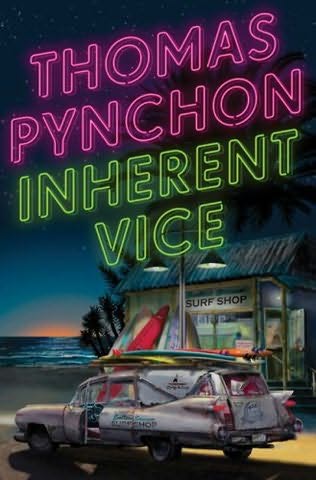
September's Pick: Inherent Vice

As August comes to a close, I have been thinking about which books to choose for our monthly poll. However, I have made a decision for the group, and it's entirely selfish: September's book will be Inherent Vice by Thomas Pynchon. Pynchon's latest novel, which can be described very briefly as a stoner gumshoe mystery, seems to baffle most critics: some expect Pynchon's postmodern leanings to come out in full force, i.e. the more complicated and confusing the better, and some like the idea of a straightforward murder mystery. It seems that Inherent Vice is somewhere in between. I am intrigued enough to find out for myself. The review on The Millions (yes, I am their greatest fan) is necessarily ambiguous, but it features a video trailer for the book that is, I believe, narrated by Tommy Chong, of Cheech & Chong fame. Which would make sense.

In other news, keep chugging away at A Prayer for Owen Meany, people! I am not yet done myself, but I will be shortly. It is proving to be a difficult one to get through, not the summer read I expected at the beginning of July. At any rate, my review will be here sometime in September.

Tuesday, August 25, 2009

Summer Vacation Reading

Inspired by an essay on The Millions called What I Read on My Summer Vacation, I decided to write what I read on my summer vacation - as it turns out, not that much. However, I can talk about the books that we talked about on my summer vacation:

1. A Prayer for Owen Meany. As this is our current club selection, I dutifully brought it with me to our trip to New Jersey. I'm halfway through, and it's proving to be slow, probably since much of the story takes place around Christmas, which makes for terrible summer vacation reading. But John Irving's a great writer, and Owen Meany is a great character. I'm pushing forward, with high hopes for the latter half.
2. A Widow For One Year. Another John Irving book, this time purchased at an awesome book store in Greenwich Village my wife and I stumbled upon called Three Lives & Company.
It is the quintessential corner bookshop, with low ceilings and dark-wood shelves. I bought the American edition of Widow to mark the event. I have read the book a few times already, so I probably won't actually read this edition, but it already looks great on the shelf.
3. Nine Stories by J.D. Salinger. I've been thinking about Salinger a lot lately, for a few reasons. One, I recently reread Shoeless Joe by W.P. Kinsella, in which Salinger (or "Jerry") is a main character. Two, I recently rewatched Imagine: John Lennon and could not help but somehow implicate Salinger in Lennon's death, as Mark David Chapman was obsessed with Holden Caulfield and had a copy of Catcher in the Rye in his pocket when he shot Lennon to death. This feeling of tragedy was exacerbated by our visit to The Dakota and Strawberry Fields in Central Park:
Nine Stories is brilliant, however, so I forgave Salinger his involvement in the twisting of Chapman's mind.
4. Housekeeping vs. The Dirt. Nick Hornby's second collection of articles for The Believer are every bit as enjoyable as the other two. I can't really put into words what these books do for me, though "pure enjoyment" comes pretty close. And he talks about Miriam Toews in this one, which gets me even more excited, as I always feel a little bit of excitement whenever a Canadian is featured in an international-type program or book. The same is true for Owen Meany, as the protagonist eventually ends up in Toronto. Even though it's Toronto, I still think to myself, "cool, he's talking about Toronto!" I'm so Canadian.
5. Shadow of the Wind - Carlos Ruiz Zafon. Everybody's favourite book about a bookstore became my wife's beach book this summer. Since she liked it, a lot, I am inclined to read it sooner rather than later. In her words, "It's a strange, mysterious mystery. And strange."

6. Girl With the Dragon Tattoo - Stieg Larsson. Another American edition find. I shopped at Borders for this one, and was lucky enough to find an edition that is not available in Canada, making my biblioventure complete. My wife also recently finished this one, and liked it, a lot. It's a dark, dark mystery, set in Sweden and is part one of a trilogy. Part 2 is out now in hardcover, Girl Who Played With Fire, and the third one is set for release next summer. The author wrote the trilogy but died before its publication, and its subsequent translation from Swedish has been an interesting biblioventure in itself, as the entire trilogy, called the Millennium trilogy, has been fully translated into French, but not English. There's also a movie in the pipe, making this a burgeoning franchise opportunity. For all the hype, however, well-deserved, according to my wife.

That's my trip in books - look for less interesting posts in the days to come. Also, it's close to September reading time, so get your thinking caps on for a September book selection.

Monday, July 13, 2009

Summer Reading Pick: A Prayer For Owen Meany

The poll has closed and our choice is clear: A Prayer for Owen Meany by John Irving has been selected as our summer pick. I am happy with this choice, as this is one Irving novel that I have not yet read, and by all accounts it is one of his best. I've seen the movie (Simon Birch), or parts of it, and I liked that, so I know I'll like the book. I also just finished reading Shoeless Joe by W.P. Kinsella (another great summer read - a full post on that later), which prominently features Iowa, writers and/or writing, and New England, three Irving staples.

Given the length of time before our next reading selection (September 1st), we should also try to read as many of the other nominees as possible and write some bonus reviews. As mentioned previously, they're all great reads and should be interesting to read about them.

Sunday, June 28, 2009

Summer Reading

For the next book selection, I thought we'd focus on summer reads - fun reads you can enjoy while sitting under a tree on a sunny summer day. I also thought that we would choose for two months instead of just one, coming back from summer with a new title for September (this has nothing to do with the fact that I haven't finished Cloud Atlas yet). I've compiled a list of summer reads - granted, "summer reads" have different connotations for different people, but I will try my best:

1. A Prayer for Owen Meany - John Irving

2. The Yiddish Policemen's Union - Michael Chabon

3. The Believers - Zoe Heller

4. A Heartbreaking Work of Staggering Genius - Dave Eggers

5. The Guernsey Literary and Potato Peel Pie Society - Mary Ann Shaffer and Annie Barrows

I've provided five possibilities, but I invite more, if there are any other suggestions. You'll notice that a few of them are familiar, as they have been previous nominees, but I think they fit the category and would be worthy reads for summer. All have great stories told with humour and are relatively short, with, I think, Eggers' book the longest at 375 pages. However, if I'm right, the pages will fly by as we will all have so much fun while reading. Who could ask for more? I'll set up the poll on Thursday with the list of suggestions.

Friday, February 27, 2009

In Like a Lion


We've got three picks for March's selection. The poll will go up tonight and close Monday night. And the nominees are:

1. No One Belongs Here More Than You - Miranda July. Miranda July (I'm convinced that she has the type of name that only sounds good when you say both first and last every time. I don't know her well enough - or at all, really - to call her by her first name, and writing just "July" is surreal, like a Neil Gaiman story: "'I don't have anything personal on this, said July, apologetically. 'It's purely procedural. We shouldn't be setting precedents'") is a contemporary American writer and I admit I have not read anything by her. No One is a book of short stories from last year, and based on the book description and her website (click on the arrow in the bottom right), it looks intriguing. Thanks Suzanne for the suggestion.

2. Through Black Spruce - Joseph Boyden. Boyden (whose surname is a little more manageable) won the Giller prize in 2008 and by all accounts is a great read. One reader said, "Really enjoying the first 10 or 20 pages I have read so far" and another fan I spoke with loved Three Day Road, Boyden's previous novel. So another winner, it looks like. Thanks to Deanna for this one.

3. A Prayer for Owen Meany - John Irving. I suggested this one for three reasons: it is now considered a "classic" (it has its own SparkNotes!); Owen Meany is an Irish name; and, duh, it's John Irving. What more reason do you need?

Vote! Do it now!