Showing posts with label review. Show all posts

Thursday, January 24, 2013

More Year-End Checklists

As you know, the end of the year brings those highly anticipated year-end lists. I've already done mine, on December 26th, and I thought I was late in posting it. My reference was Largehearted Boy's aggregated year-end list, which was actually put up sometime around the beginning of November. In the last week, however, I've realized that normal people - i.e. bloggers, not publications or retailers - do their year-end lists at year's end. Go figure. It took me a second to think about that - every retailer, publisher, magazine, newspaper and, of course, author, wants those coveted lists to be released to the public well in advance of the lucrative holiday shopping season, and they're not wrong for doing so. The awesome benefit for this reader is that I not only get to start reading "best of" lists in November, I get to continue reading them all the way into the new year. Awesome!

This brings me to my subject. Over the course of a week at the beginning of January, several bloggers posted their year-end thoughts. I am going to highlight a couple of them. 

1. I'm going to start with New Dork Review of Books, since it is the most organized and list-heavy of the articles. The lists include "Favourites", "Least Favourites", "Classics", and "Under-the-Radar". I like this organization because, as I mentioned before, I am interested in the current year's selection of books, not every book ever written. I like that there's a distinction between "Classics" and other "of the year" categories. As well, his no. 1 favourite? Arcadia by Lauren Groff. 

2. Another stat-heavy year-end article comes from Too Many Books in the Kitchen. Mr. Hingston outlines his reading list month-by-month and finishes off with overall stats, breaking down his reading list into demographic distinction. It's another interesting list to check out, and he makes a few 2013 reading resolutions as well. 

3. Minnesota Reads is worth a look simply because its tagline is "We like big books & we cannot lie." One of the reviewers, Christa, separated her year-end post into 13 "Chapters", one for each month of the year and a 13th for the new year. My favourite is Chapter 3:
In 2012 I took one for the team. I read Fifty Shades of Grey because I knew none of the other reviewers at Minnesota Reads would do it and the reading public deserved to know. I have been called, by myself, a person who loves to do things she hates. As expected, it was horrible. But some unexpected goodness came from this fail: The best book review I’ve ever written in my life. Also: I earned the right to make a judge-y eyebrow raise when I see a well-worn copy get passed through a group. I mean, who borrows a copy of Fifty Shades of Grey? Imagine taking a blacklight to that thing.
4. KevinfromCanada is by an expat living in England, and his year-end post is a very full list of his favourite books of 2012. I like it simply because he talks about his favourite books written in 2012, rather than read in 2012. See above. Plus, his recommendations are pretty spot on.

5. Baby Got Books is, as they call it, "a loose confederation of book nerds literary bloggers." They have contributors from across the States, and they're usually pretty amusing. The head honcho, Tim, gives his top picks of 2012. He lists them under several categories, which serves to avoid a hierarchy as well as justify some of his choices. My fave is Gone Girl:
My favorite “holy crap” novel of the year was Gone Girl by Gillian Flynn. From my review: “Several times in the story you will say “holy crap”, out loud, when Flynn throws yet another unexpected bomb at the reader. I read this book in a day and a half. It only took that long because I had to sleep (at some point) and go to work”
6. Pickle Me This is a blog that I've been reading for a long while now, and it is interesting to me how Kerry juggles a professional life in writing, reviewing and teaching (and reading), a family that is about to grow by one in the coming year, and blogging - on two different sites: she is also a contributor at 49th Shelf. Her Year in Books post is less a favourite books post - she does that here - and more a personal reflection on the past year. She managed to finish 120 books in 2012 - an enviable mark next to my paltry 55 books read.

7. Rose Coloured is Rebecca Rosenblum's personal blog. She is an accomplished writer living in Toronto, and she talks about her life as a writer with honesty and humility. Her reviews are more about how the books make her feel - and it is her skill as a writer that conveys those feelings so well. I definitely enjoy reading her reviews, and I have more than once picked up an author based on her recommendation alone. Her second book of short stories, The Big Dream, is slated to be Do Not Talk About Book Club's April selection in 2013.

8. Finally, I'll leave you with a post from The Millions. The Millions is another collective of contributors writing on wide-ranging topics. Its posts are also wide-ranging, everything from simple link posts to long format reviews, recollections, and interviews. Michael Bourne's wrap-up post is about a goal that most readers avoid: "read fewer books." He is an obsessive list-keeper, having recorded all of the books he has read since 2000. This year, however, he'll read less; be less obsessive about keeping the lists, and enjoy the books: "and if I see a nice, fat doorstop of a novel I want to read, I won’t stop to check whether I’m far enough ahead for the year to give up the two or three weeks it’ll take to read it. I’ll just read the damn thing."

I listed these blogs because I read everything that they post. They are extremely interesting, and every time I read a new post, I am reminded how much I love reading what other people have to say about books. I guess that's my 2012 Year in Reading: I read a lot, I blogged a lot, and I enjoyed it thoroughly.  

Monday, November 19, 2012

Review: Gone Girl

Gone Girl is a fascinating read - it moves from a gripping police procedural whodunit to a psychological spine-tingler in no time, and with Flynn's clever writing, it works the whole way. The story opens with Nick Dunne getting a call that his front door is wide open and the cat is on the stoop. When he gets home to investigate, it's not a matter of someone simply forgetting to close the door, but the living room is tossed and Amy, his wife, is nowhere to be found.

The chapters alternate between the present, following Nick, and the past, following Amy's diary entries as the authorities search for missing Amy. Flynn reveals the clues as Nick discovers them, from the suspiciously organized tossed living room to the discovery of the anniversary treasure hunt that Amy has set up and is doomed to miss. Did I mention that this story starts on the day of their fifth anniversary?

Gone Girl is an examination of a marriage, of the human psyche, of nature vs. nurture - Nick and Amy are thoroughly pulled apart and put back together again over the course of the mystery. It is a chilling read as the reader learns more and more about Nick and Amy, their parents, friends and neighbours. Flynn keeps you guessing, and won't let you put it down!

Friday, November 09, 2012

Review: This is How You Lose Her

I hadn't read any Junot Diaz before this collection of linked short stories, but I am eager to read more, especially if Yunior is the narrator. Yunior's stories are heartfelt, poignant, gritty - he is sympathetic only because he is so far beyond sympathy. The best stories are when he admits his faults and he can't see a way out; or when he writes about his father & mother, coming to terms with a city and life that they know nothing about.

Diaz writes about the immigrant experience in a new way as well. As a Canadian, I've read many stories about the immigrant experience in Canada from all parts of the world. But Diaz adds more to this experience: in New York, the new citizens of the city don't so much create new lives but recreate their old ones in the new neighbourhood, as they are surrounded by others doing the exact same thing.

Diaz has also been acclaimed in two other ways: first, he was nominated for a National Book Award, which, by several accounts, is his to lose; secondly, he was awarded a MacArthur Genius Grant for "talented individuals who have shown extraordinary originality and dedication in their creative pursuits and a marked capacity for self-direction." The prize is a "no strings attached" cheque for $500,000; but he may find that it comes with a few strings: "The MacArthur grant is an unusually rich prize, giving each of its recipients $500,000 over the span of five years in order to further their work. As a grant, the money comes with no strings attached other, perhaps, than those of expectation and envy"

As far as I can tell, however, he deserves both; his voice is unique and necessary. If you haven't read Diaz before, This Is How You Lose Her is an excellent place to start.  

Friday, November 02, 2012

Review: Siege 13 by Tamas Dobozy

This collection of linked short stories is remarkable. Dobozy writes about the 1944 siege of Budapest and its effect on its citizens, the culture and the subsequent generations. His writing is sharp, and each story carries the memories of the siege that his characters cannot let go. Excellent!!

Wednesday, September 26, 2012

Review: One of Our Thursdays is Missing

I recently finished the final three books in Jasper Fforde’s Thursday Next series: Something Rotten, First Among Sequels and One of Our Thursdays is Missing. Fans of the series will have read these already, most likely when they originally came out. The latest installment, One of Our Thursdays is Missing, came out in 2011, and so I will focus my review on this particular book. First, a quick recap: we were first introduced to Literary Detective Thursday Next in The Eyre Affair, in which her attempt to stop a book thief and murderer takes her into Jane Eyre and the resulting action causes a change in the novel’s plot (the ending is much better now). Lost in a Good Book was the second book, followed by The Well of Lost Plots, Something Rotten, and First Among Sequels. In each novel, Fforde expands on the idea of BookWorld, which posits that fictional characters are real entities whose jobs are to portray characters in novels as they are being read. It is a fascinating world, and Fforde does well to maintain his metaphor throughout.

In One of Our Thursdays is Missing, the narrative conceit is changed slightly. Thursday Next’s adventures have become so well known that a series of novels were written about her, giving birth to the fictional Thursday. Fforde goes to several levels of metafiction here, as the first five books in the fictional Thursday Next series have the same titles as the actual books; Fforde goes so far as to reveal the truth behind a major character's actual name, as it was changed for the fictional version.


The novel is told by the written Thursday, who must solve a BookWorld mystery of espionage and corruption, as well as find the real Thursday, who seems to be missing. Fforde expands on the conceit of BookWorld, giving metaphor, malapropism, tropes, etc, tangible properties. It works as a device and he keeps it interesting, especially during the token River Boat trip with cliche characters.

The story is exciting as always, and while it is not exactly a crime novel, it works well as detective fiction. Thursday is an excellent character, and Fforde explores the idea of the self through a fictional representation of his staple character. The book follows a predictable narrative arc, yet it is anything but predictable.

However, I felt as though there was an opportunity to dig deeper into the era of ebooks and ereading. For instance, Fforde has an opportunity to explore the definitions of "text" and "book", as well as the evolution of authors, publishers and readers. It is addressed peripherally, but not nearly enough. It is enough of a sea change in publishing and reading technology that it felt like the white elephant in the room while I was reading it. Of course, I was reading it on an ereader, so that may have influenced my opinion. Perhaps the next Thursday Next book will tackle this topic in more detail.

Overall, the six books of the Thursday Next series are excellent: fun, thought-provoking, intelligent and well-written. Highly recommended - four wise-cracking dodos out of five.

Saturday, September 08, 2012

Review: All Men Are Liars

All Men Are Liars by Alberto Manguel is an interesting book - well written, clever, suspenseful and thought-provoking. The book is about a writer of minor acclaim, and a journalist is trying to find more information - each section of the novel is a different speaker contributing a perspective of the writer's life. Furthermore, and as the title indicates, none of the accounts agree on exactly what happened; throughout, the reader must ask, "who is actually telling the truth here?"

My only pet peeve was the first section, which was told by a character named Manguel, who was a writer from Argentina who now lives in the South of France. Yes, Manguel wrote himself into the novel. It's an interesting premise, and some authors have done it well - Life of Pi immediately comes to mind - but it is a tricky thing. I am not convinced that Manguel has pulled it off here, but the other sections are compelling and drive the narrative well.

Overall, a quick and interesting read - three secret manuscripts out of five.


Thursday, August 30, 2012

Review: The Well of Lost Plots

I just finished reading The Well of Lost Plots by Jasper Fforde, the third book in the Thursday Next series. For a primer on the series, check out Jasper Fforde’s website here - the first book in the series, The Eyre Affair, is worth checking out even if you aren’t inclined to read the whole series (My review of The Eyre Affair can be found here).

In The Well of Lost Plots, Thursday Next is in hiding after being framed by her old friends at Goliath Corps. She retreats to Book World, finding shelter in a yet-to-be-published novel titled Caversham Heights. She is safe from her Outland persecutors, but is still charged with the crime of changing the ending to Jane Eyre, and must stand trial. This subplot is quite amusing, as it gives Fforde a chance to bring in Kafka as well as the Red Queen. Both trials are humorous studies in logic. As well, Thursday is apprenticing to be a Jurisfiction agent with Miss Haversham (Great Expectations), and becomes involved in a plot to change the way books are read forever. A few characters meet their demise along the way, and it is left to Thursday to save the day.

Meanwhile, she is being tormented by Aornis Hades, sister of the devious Acheron, who met his demise while battling Thursday in The Eyre Affair. Little sister is out for revenge, and she uses her powers of memory to haunt Thursday’s dreams. Thursday struggles to remember her old life in the Outland as Aornis slowly removes the memories from Thursday’s mind.

Fforde does an excellent job once again with this book. He introduces several new characters from literature, such as Heathcliff from Wuthering Heights and Uriah Heep from David Copperfield, adding to the cast of memorable literary characters who interact with Thursday. He also maintains a tenuous balance between fantasy and realism throughout the stories - he follows his own rules about Book World. The next book is called Something Rotten - I am looking forward to it!

Saturday, June 04, 2011

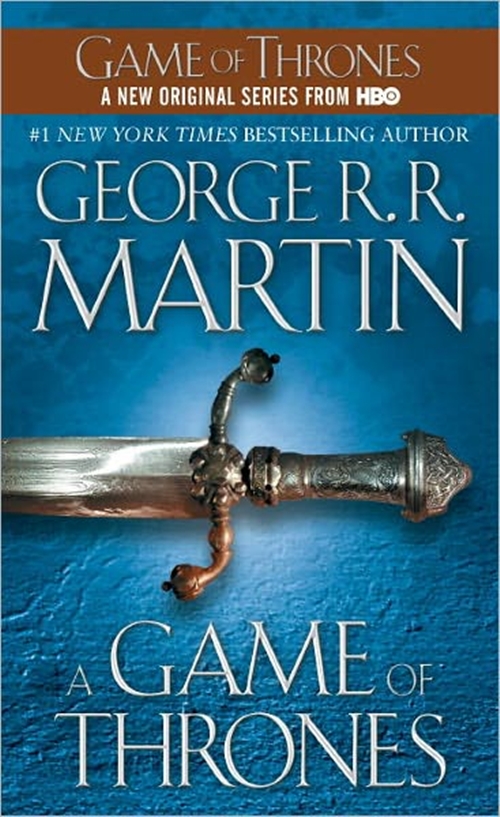
Review: A Song of Ice and Fire

I’m 50% through the (soon to be) five part series A Song of Ice and Fire by George R.R. Martin, having finished A Game of Thrones and A Clash of Kings. I have started A Storm of Swords, and I am not expecting any diminish in quality - the first 150 pages are proving me right so far.

A Game of Thrones is a compelling read, focusing on several characters at once in an overall cast of hundreds, really. Martin is an accomplished storyteller, revealing just enough about the character and plot to build continuously on the already intense storyline. The saga starts with tense relations between the King of Westeros, Robert Barathon, and his Queen’s family, the Lannisters. The King has selected Eddard Stark to be the Hand of the King, his right-hand man, to have someone at court that he can trust. But Stark soon finds that he is in over his head, and duty and honour have no place at the seat of the Seven Kingdoms.

Martin focuses the story on House Stark for the most part: Eddard Stark, Lord of Winterfell, his wife Catelyn, sons Robb, Bran, and, to a lesser extent, Rickard, daughters Sansa and Arya and bastard son Jon Snow, for whom life does not get easier from an already tumultuous upbringing. The trend continues in A Clash of Kings, and although one reviewer called the storylines “somewhat predictable,” it seems that she has not yet read A Clash of Kings, as Martin adds greatly to the one or two massive plot twists in A Game of Thrones in A Clash of Kings: by the middle of the book, I had no idea what to expect, as anything, Martin threatened, could happen. A Storm of Swords promises to be equally unsettling.

The series is getting much ballyhoo as it is the next hot new show on cable, having completed 7 episodes on HBO. The series, simply called Game of Thrones, has a star-studded cast and is reportedly both well-done and true to the book. They have already started casting for the second season, and with the fifth book due out July 12th, they seem to have a lucrative series run on their hands.

Read another review at Magnificent Octopus, and another at The Millions.

Monday, May 30, 2011

Review: Unless


Carol Shields’ Unless is a story about hope, determination, and perseverance. The crisis of the novel is a mother telling the story of her daughter, who one day decides to leave home and live on the streets of Toronto, without a word of explanation or reason. Reta and her family are left to piece together the clues as best they can, and hope that one day they will get their daughter and sister back.

Reta is the narrator of the story, and, as a writer herself, conscious of what she reveals and what she doesn’t. As the story progresses, however, the reader sees more about Reta than perhaps she intended initially; she becomes more and more willing to accept blame and finds fault with her own tendencies until she becomes much too hard on herself. As readers, the sympathy felt for Reta is a work of genius by Shields. Reta’s daughter, too, is an enigma as we learn about her through her mother’s eyes. And the more we learn about the events that lead to her decision to leave home and live on the streets of Toronto completely cut off from her previous life, the more we see that Norah really is her mother’s daughter.

Of the Canada Reads 2011 nominees, Unless is, in my opinion, the most well-written - Shields’ superior skill is without question. The story is contentious, however, and there is an argument that the denouement is not quite the sum of its parts. But Unless is a journey of waiting and watching more than anything, which means that the eventual outcome does not need to be bigger than anything that came before. And I enjoyed it immensely.

Though the book did not win the coveted Canada Reads title, it is still a book that Canadians should read - not only for the message of goodness and hope that, I think, most Canadians inherently possess, but also because Carol Shields is one of our most gifted writers and teaches us about the English language through her writing.

Sunday, April 12, 2009

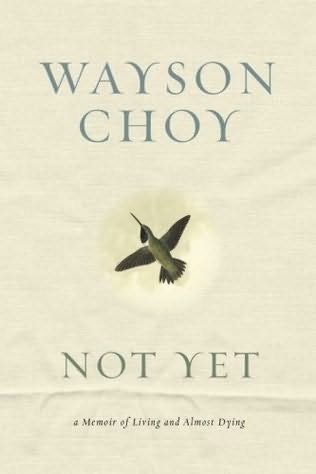
Review: Not Yet

Not Yet: A Memoir of Living and Almost Dying - Wayson Choy

Wayson Choy's newest book chronicles his brush with death after a heart attack in 2001. He was kept in a medically-induced coma for four days and spent several months in the hospital afterward. It was a traumatic event that made him think about his life, his family, and himself.
Choy is quite candid in this account of his illness, reporting everything from learning to walk again to becoming aroused during a tissue massage (that part he probably could've skipped). However, the proof is in the details, and the story of his recovery would not have been as poignant or sympathetic had he not bared his soul in this way. We learn of the close, close friends that are his family and the circumstances leading to those same relationships. As the Random House official page reports, "Not Yet is a passionate, sensitive, and beautiful exploration of the importance of family, which in Choy’s case is constituted not through blood but through love. It is also a quiet manifesto for embracing life, not blind to our mortality, but knowing how lucky we are for each day that comes." Highly recommended.

Sunday, April 05, 2009

Review: Late Nights on Air

Late Nights on Air follows a group of Yellowknife radio station employees over the course of a year – new arrivals, old hands, fallen stars. Set in the 70s, it takes place against the backdrop of the burgeoning oil boom that raises the possibility of a pipeline that would seemingly cut the north in two. The characters are given equal treatment over the first part of the novel, as Hay fully explores each characters motivations, history, impulses and hopes for the future. By the halfway point, we know the characters, we know why they do what they do and what we can expect them to do next. The climax of the story, as a result, is not so much a plot point but character development.
Hay is a funny, fluid, emotional writer that adds wit and spontaneity to each character and situation. In fact, I found that she was nearly opposite Joseph Boyden in style – reading Late Nights immediately after Through Black Spruce, this was quite a shock at times. However, Hay’s relaxed, detailed style made for a delightful read, providing an opportunity for the reader to engage with the social and political climate of Yellowknife in the 70s without losing contact with the characters directly affected by such possible changes. Hay has a reporter’s voice in this regard, giving the facts of the people and circumstances involved in living in Yellowknife at this time, allowing the reader to draw conclusions and connections about the characters and the events that follow.
I enjoyed this book. It was a great read, quick and funny with a poignant climax and satisfying conclusion. It’s not a political book per se, but the political events shape the characters’ decisions enough that a statement about the political events of the time comes through. I am looking forward to reading her other books, A Student of Weather, Garbo Laughs, and another one, I think. I can’t remember. Four overturned canoes out of five.

Friday, March 13, 2009

Review: “The Loneliness of the Long Distance Runner”

This short story is a masterful piece of short fiction. The premise is simple: the story is told over the course of two runs – one a morning jog and the other a competition. During these excursions we learn about the narrator, the runner, why he is where is and why he is running. His story is interesting and he is a sympathetic character, but, more importantly, we learn how he uses running to free himself from the restraints of society and code: “Because when on a raw and frosty morning I get up at 5 o’clock and stand shivering my belly off on the stone floor and all the rest still have another hour to snooze before the bells go, I slink downstairs through all the corridors to the big outside door with a permit running-card in my fist, I feel like the first and last man on the world, both at once, if you can believe what I’m trying to say.” The narration is in real-time, following the runner’s thoughts as he makes his way over the morning course and then during a competition.
As the title suggests, this story is about running, even though it is a device for a very different story. It will appeal to anyone who has ever run, either competitively or recreationally. Certainly, the “loneliness of the long distance runner” has a metaphorical meaning as well as a literal one in this story, but it is also a universal feeling, as most runners, at any given time, have felt the solitude, the silence, of running along wooded trails, or in urban areas, or, as I felt during my first 10k, within a crowd of 10,000. Sillitoe evokes this feeling perfectly, the inner monologue narration capturing not only the meanderings of the runner’s brain, but also the emotion and adrenaline of the competition.
Beyond the workings of the runner’s mind is a deeper story, the personal life and goals of the runner himself, and Sillitoe manages to present all sorts of conflict, from social to generational, behind the immediate act of the morning run or afternoon competition. In the end, it becomes unified, and we see not that the runner succeeds, but that he had succeeded long before he set that first foot on the cold floor: “Then he turned into a tongue of trees and bushes where I couldn’t see him anymore, and I couldn’t see anybody, and I knew what the loneliness of the long-distance runner running across country felt like, realizing that as far as I was concerned this feeling was the only honesty and realness there was in the world and I knowing it would be no different ever, no matter what I felt at odd times, and no matter what anybody else tried to tell me.” Brilliant.

Sunday, February 15, 2009

Review: Mister Pip

I finished Mister Pip by Lloyd Jones just over a week ago and I have been eagerly recommending it to anyone who will listen. As I work at a bookstore, "anyone"is really any customer that has asked me for assistance in the last few days. And I think I've even sold a few. I can easily recommend this book because it is intriguing, fast-paced, sympathetic, heart-breaking and, of course, well-written. Jones is an efficient writer, holding details back and allowing the reader to assume or guess at what comes next. It is a quick, excellent read - obviously, I highly recommend it.
The story begins as an island village in the South Pacific is being evacuated under threat of bloody civil war. The villagers are left with no teacher, among other things, and an eccentric white man - the only white left on the island - agrees to teach the children while the crisis continues. He teaches normal subjects but adds a daily treat for the kids - a reading from Great Expectations. Mathilda, the narrator, describes the first lesson: "I had never been read to in English before. Nor had the others. We didn't have books in our homes, and before the blockade our only books had come from Moresby, and those were written in pidgin. When Mr. Watts read to us we fell quiet. It was a new sound in the world. He read slowly so we heard the shape of each word." Each day he reads a new section of Great Expectations, and each day the kids are exposed to a different world, one in which they could dream freely without worrying about what the next day will bring.
The story progresses to an understandably tragic climax but, as one reviewer puts it, the "novel would be almost unbearable if it weren’t for its moments of affirmation of the miracles possible between good people and within the pages of a good book."
Jones raises many interesting questions with this story. I found myself recalling not only post-colonial narratives of Chinua Achebe and Cry, The Beloved Country (or even Graham Greene), but also Fahrenheit 451 in that books and stories can provide an escape from persecution. It is a complex and engaging novel that I thoroughly enjoyed. 5 Dickens novels out of 5.

Tuesday, February 03, 2009

Review: Watchmen

Apparently, a lot of people read Watchmen, especially with the movie coming out in a couple of months. I admit, that's the reason I finally read it, since the previews look quite awesome. It is an impressive novel - I've not read anything like it. It is more than a graphic novel; it is a work of literature in itself. Its storyline and character development are its strong points - first, Alan Moore and Dave Gibbons have to convince you of superheroes that do not have any super powers - they're extremely capable and morally motivated individuals who use those skills to fight crime. The only character with any sort of "super" powers - Dr. Manhattan - has unlimited power and is more powerful than any other comic book superhero in history. It is turning the genre on its head with these new descriptions of heroes. The achievement of the novel is that it becomes believeable within a short period. The characters are interesting and sympathetic and we soon fall for the classic "cheering for the bad guy" ploy so often used. In the end - I won't bother giving away any story secrets - the plot and storyline come through as well. It is indeed a masterpiece.
The graphic aspect means that there are other tools employed: scenes without dialogue, mixed media, challenging images, seamlessly interwoven story arcs. It is a graphic novel not just because it uses images, but because it uses images to enhance and contribute to the reading experience.
I strongly recommend this book, and not just because the movie is coming out; you should see that, too. Five bloody smiley faces out of five.