Showing posts with label Milan Kundera. Show all posts

Thursday, May 28, 2009

What My Wife Is Reading #4

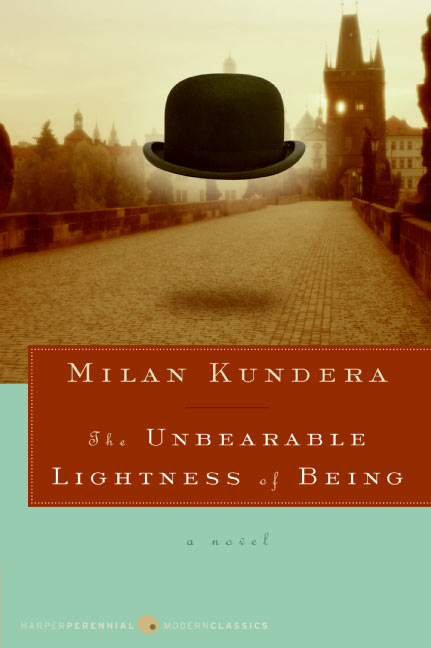
After a long hiatus, the popular series What My Wife is Reading is back. Updates from the last post: The Unbearable Lightness of Being never had a chance, as my wife took an immediate disliking to Kundera's style and characters. Such is life.
Recently, my wife has been reading academic work, with two conference papers down and a dissertation chapter drafted. However, she did pick up Jonathan Strange & Mr. Norrell by Susanna Clarke. It is a great book, a test of will against 900+ pages of 19th magic and darkness. I admit, I had a love-hate relationship with this book. Way back in 2004, my wife bought this for me for Christmas. I started it immediately, and it took the entire rest of my holiday to finish, even with several long nights of reading. I was frustrated by the 19th century pace - Clarke indeed channels Austen, Bronte and Eliot with this book. Also, as is the issue with every introductory novel, she spent a long time introducing the characters and setting. I believe that is the point my wife is at right now in the book - the good parts are just beginning. Yes, they wouldn't be as good without the background material; yes, knowing the dynamic between Strange and Norrell informs all that follows, but it doesn't seem worth it until the very end. I do admit that I had trouble putting it down after a certain point. Hence, the love-hate relationship. I resented the book for making me read so much of it, but the latter half was rewarding enough to admit that it was worth it. I am not sure how my wife feels at this point, but I am sure it is much the same.
I will say this: I have not read anything like it. The book is regularly touted as a Harry Potter for adults, but I feel that it is different enough to avoid such comparisons. I hope my wife likes it. I will let you know.

Wednesday, March 18, 2009

What My Wife is Reading - Watchmen and Adventures


This past month my wife and I survived, I mean, enjoyed three family visits, which left little time for reading. However, my wife did finish two of the books on the previous list, Watchmen and The Adventures of Kavalier and Clay. I took the opportunity to ask her about them:

M
: Okay, let’s talk about these books.
W: Let’s do it.
M: What did you think of Watchmen?
W: Hmm. It was quite graphic in parts, and there’s a misogynistic tone to Alan Moore’s writing that disturbs me. I liked it, just not as much as I thought I would.
M: Moore’s intent is certainly to change the way the idea of the superhero. Does he succeed?
W: Well, I hated Rorschach. He was a disgusting character, really. I was happy when he died. Dr. Manhattan was an interesting character, though; it seems that he could’ve changed things, but, in the end, chose not to as he could see the outcome and determined that it was best.
M: I suppose in that way Moore does succeed, as the image of Rorschach as superhero never seems right. Comedian, Nite Owl, Ozymandias, Silk Spectre – they succeeded in spite of themselves, but never triumphantly.
W: I don’t think I would’ve read it if the movie wasn’t out.
M: Right. We should see that soon. Okay, now to Michael Chabon.
W: I loved The Adventures of Kavalier and Clay. It was epic, exhausting at times, great detail, good length.
M: Yes, you do burn through books quickly. What were the strong points?
W: It’s a great story and the characters of Kavalier and Clay are well-developed and intriguing.
M: Was it engaging?
W: I’m married.
M: [silent embarrassment]
W: There was comedy, intensity, the whole gambit – Chabon is a great storyteller. It is an awesome book.
M: So you would recommend it?
W: Easily.

Now my wife is reading The Unbearable Lightness of Being by Milan Kundera. Not only does this book have the distinction of being on the 1001 Books To Read Before You Die list, it is also on mental_floss’s Top 25 Most Powerful Books of the last 25 years. Written in 1984 and set in 1968 Czechoslavkia, Lightness “made life behind the Iron Curtain seem real to Westerners, even sexy.” Furthermore, it contributed to the falling of the Berlin Wall: “The bureaucratic intimidation, pervasive spying, and grim Communist kitsch are there, but so is an unwavering erotic force that proves stronger than any repressive regime.” I look forward to hearing about it.